Jaguar MkII
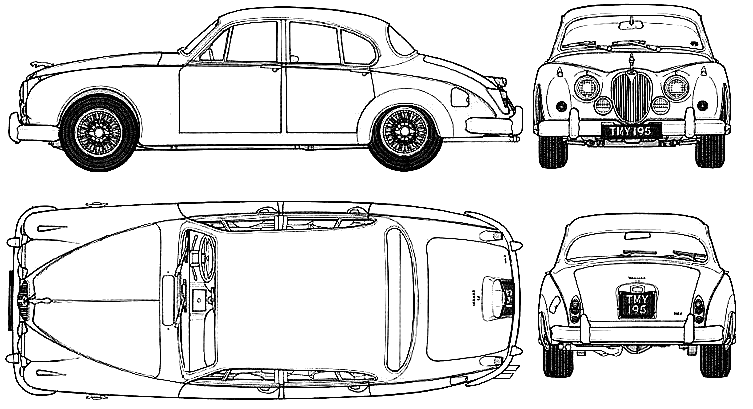
The Jaguar Mk2 was introduced in 1959 by Jaguar Cars as a substantial evolution of the earlier 2.4 and 3.4 litre saloons. Visually similar to its predecessor, the Mk2 featured a larger glass area, a revised rear axle track, and significant improvements in braking—most notably the adoption of four-wheel disc brakes as standard, a relatively advanced specification for a production saloon at the time. Powered by versions of Jaguar’s XK inline-six engine (2.4L, 3.4L, and the celebrated 3.8L), the Mk2 combined refined wood-and-leather luxury with genuine high performance. The 3.8-litre variant in particular earned a formidable reputation, capable of around 125 mph, placing it among the fastest four-door production cars of its era. Its blend of speed, handling, and understated styling made it popular not only with professionals and executives, but also in motorsport, where it achieved notable success in touring car racing during the early 1960s.
Daimler 250 V8
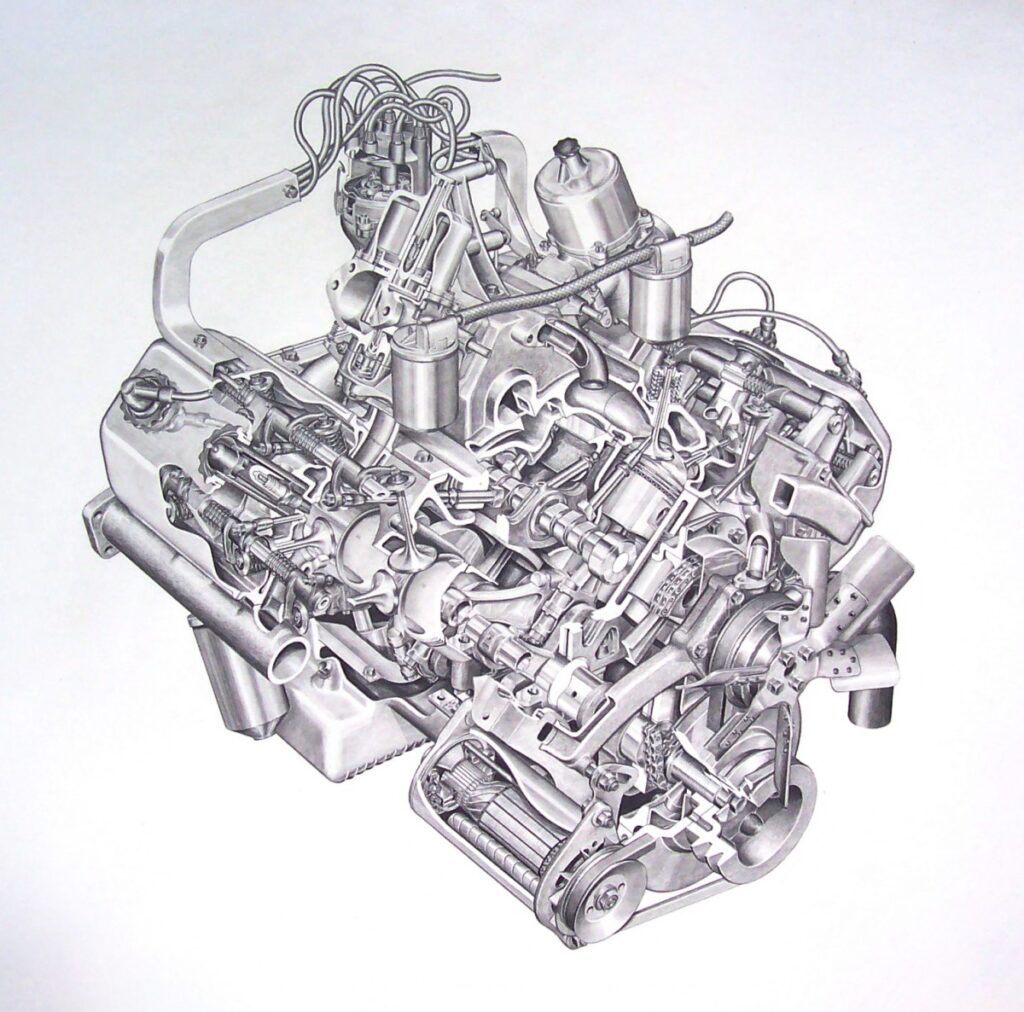
The Daimler 250 V8 saloon, introduced in 1962, was closely related to the Mk2 following Jaguar’s acquisition of Daimler Company in 1960. Although outwardly similar to the Jaguar, the Daimler featured a distinctive fluted grille and was powered not by Jaguar’s XK engine but by Daimler’s compact 2.5-litre V8, originally designed by Edward Turner. This lighter, high-revving engine gave the Daimler a different character—smoother and somewhat more refined, though slightly less powerful than the 3.4 and 3.8 Jaguar variants. Internally, the Daimler emphasized traditional luxury, often with upgraded trim details. Production of both models continued through the 1960s, and they remain highly regarded today as quintessential examples of the compact British sporting saloon: cars that successfully fused performance engineering with mid-century executive comfort.